

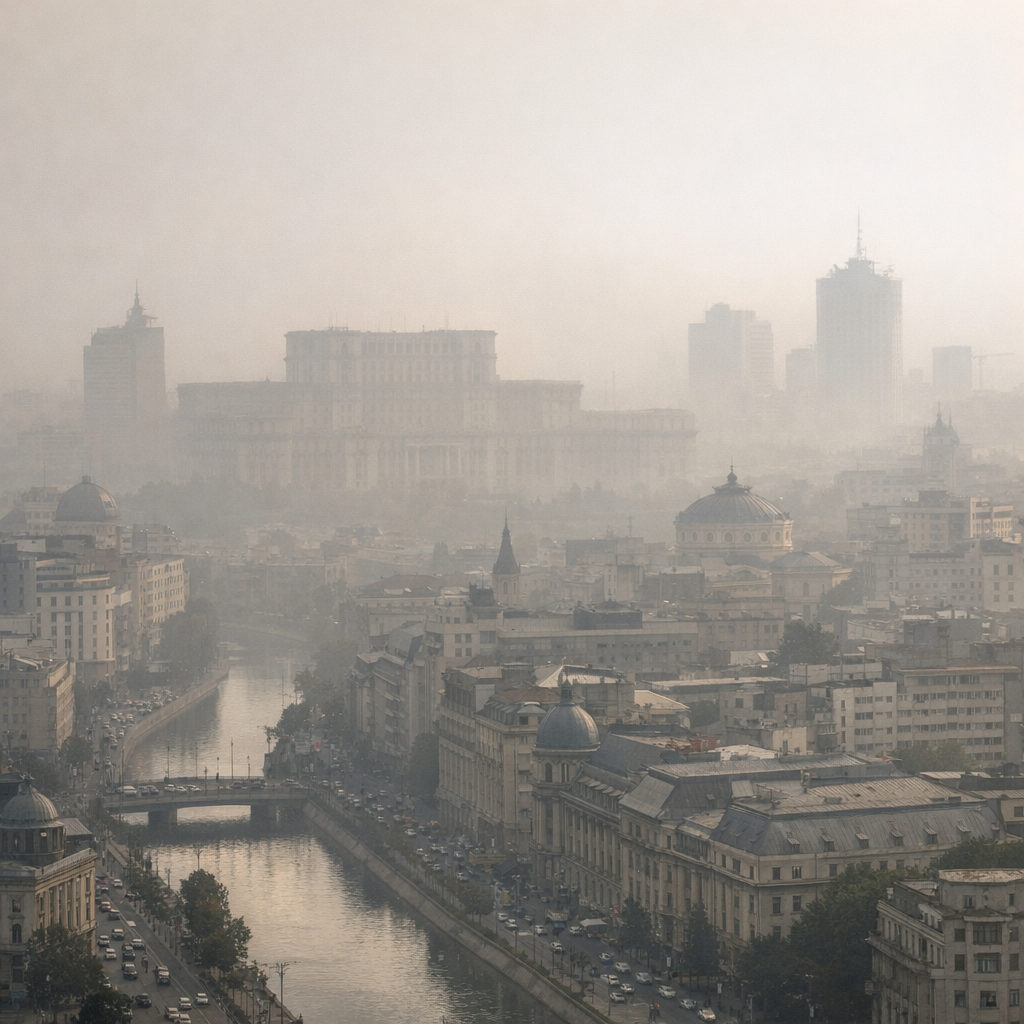
Climate in Bucharest is not static—it’s changing in ways that affect daily life, public health, and the landscape around us. From rising heat levels to worsened air quality, understanding these trends helps us prepare better for what’s ahead.
Rising Temperatures and Urban Heat Stress
Over the past 50 years, summers in Bucharest have become noticeably hotter. Mean high temperatures in June, July, and August are more than 5 °C higher now compared to the late 1970s. This warming isn’t just about discomfort—it increases heat-related health risks and puts strain on infrastructure. Projections suggest that without stronger sustainability policies, heat stress will grow in both intensity and frequency. Recent research using high-resolution data confirms that urban vegetation—which usually helps cool the city—struggles during heatwaves. As the cityscape becomes warmer, we lose some of green life’s natural relief against rising heat.
Changes in Rainfall, Snow, and Seasonal Patterns
Precipitation across Bucharest has held a relatively steady average, but subtle shifts are emerging. More days per year now bring heavy rainfall (over 20 mm), and winter snow cover and snowfall episodes are becoming less regular or intense. Also, the city has seen fewer days with fog and frost. These changes are tied to rising winter and accompanying rise in low-temperature thresholds—meaning snow may fall, but accumulate less often.
Air Quality: Rough Winters, Cleaner Springs
Pollution in Bucharest shows strong seasonal patterns. Winter is when particulate matter such as PM2.5 peaks, owing to increased heating and traffic under stagnant air conditions. During autumn, nitrogen dioxide (NO₂) rises sharply—especially in busy traffic zones. In contrast, spring and summer tend to bring lower levels of PM2.5 and NO₂, helped by stronger sunlight, wind, and more open and outdoor activity that aids dispersion of pollutants.
Why These Patterns Matter
- Health impacts: Higher heat increases risk of heat exhaustion, while particulate pollution contributes to respiratory and cardiovascular issues.
- Urban planning: Landscape design, green infrastructure, and building standards become essential tools in mitigating heat and air pollution.
- Weather expectations: Preparing for intense heat, more abrupt rainfall, and less predictable winter weather will affect transportation, energy, and public services.
What Each of Us Can Do
On our level, more greenery at home—trees, gardens, even planters—makes a difference. Reducing car use, especially in cold months, helps cut NO₂ and PM emissions. Choosing public transport, cycling, or walking can ease air congestion. Also, staying informed—checking real-time air quality and weather alerts—lets you take actions like avoiding outdoor workouts when pollution is high or planning errands on clearer days.
Bucharest’s climate and environment are shifting. But with awareness and local action—from individuals, communities, and city authorities—it’s possible to adapt. The patterns may be subtle, but their effects are real. Noticing them, understanding them, and responding is how we protect life and quality in our city.