

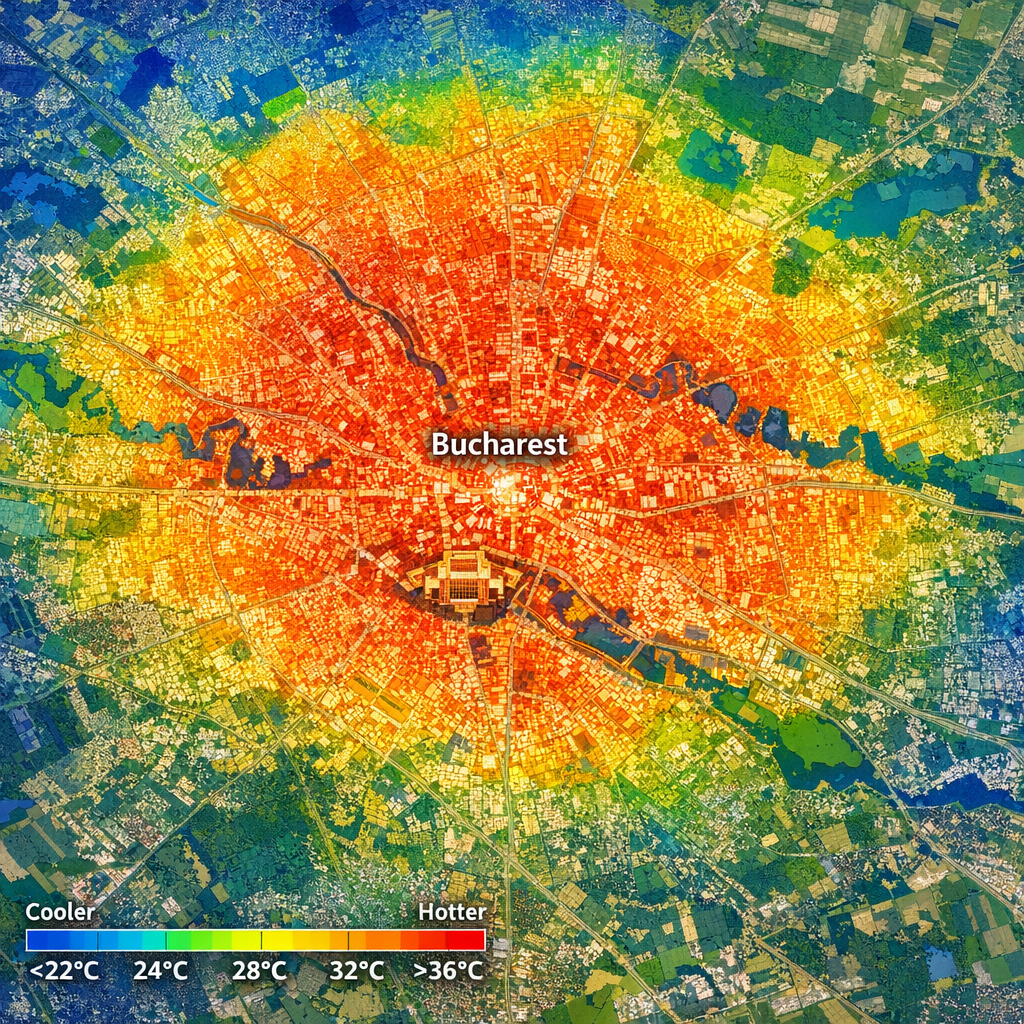
Bucharest, like many major cities worldwide, experiences the Urban Heat Island (UHI) effect, where urban areas are significantly warmer than their rural surroundings. This phenomenon arises from factors such as extensive concrete and asphalt surfaces, reduced vegetation, and waste heat from human activities.
Causes of the UHI Effect in Bucharest
The city’s rapid urbanization has led to increased impervious surfaces that absorb and retain heat. The reduction of green spaces diminishes natural cooling through evapotranspiration. Additionally, the dense arrangement of buildings can trap heat, further elevating temperatures.
Impacts on the Local Climate
Research indicates that Bucharest’s UHI effect is more pronounced than in some other European cities. A study comparing Bucharest and Prague found that Bucharest exhibited a higher average UHI intensity, with significant increases over recent decades. This intensification is linked to anticyclonic weather patterns with southerly winds, which amplify the UHI effect.
Consequences for Residents
The elevated temperatures associated with the UHI effect can lead to increased energy consumption for cooling, higher levels of air pollution, and adverse health effects, particularly for vulnerable populations. Moreover, the UHI effect can exacerbate the frequency and intensity of heatwaves, posing additional challenges for urban dwellers.
Mitigation Strategies
To combat the UHI effect, Bucharest can implement several strategies:
- Enhancing Green Spaces: Increasing urban vegetation through parks, green roofs, and tree-lined streets can provide shade and promote cooling through evapotranspiration.
- Utilizing Reflective Materials: Employing light-colored or reflective materials for roofs and pavements can reduce heat absorption.
- Improving Urban Design: Designing buildings and streets to enhance airflow can help dissipate heat.
- Promoting Sustainable Transportation: Encouraging public transport and non-motorized travel can reduce waste heat from vehicles.
By adopting these measures, Bucharest can mitigate the UHI effect, leading to a more comfortable and sustainable urban environment for its residents.