

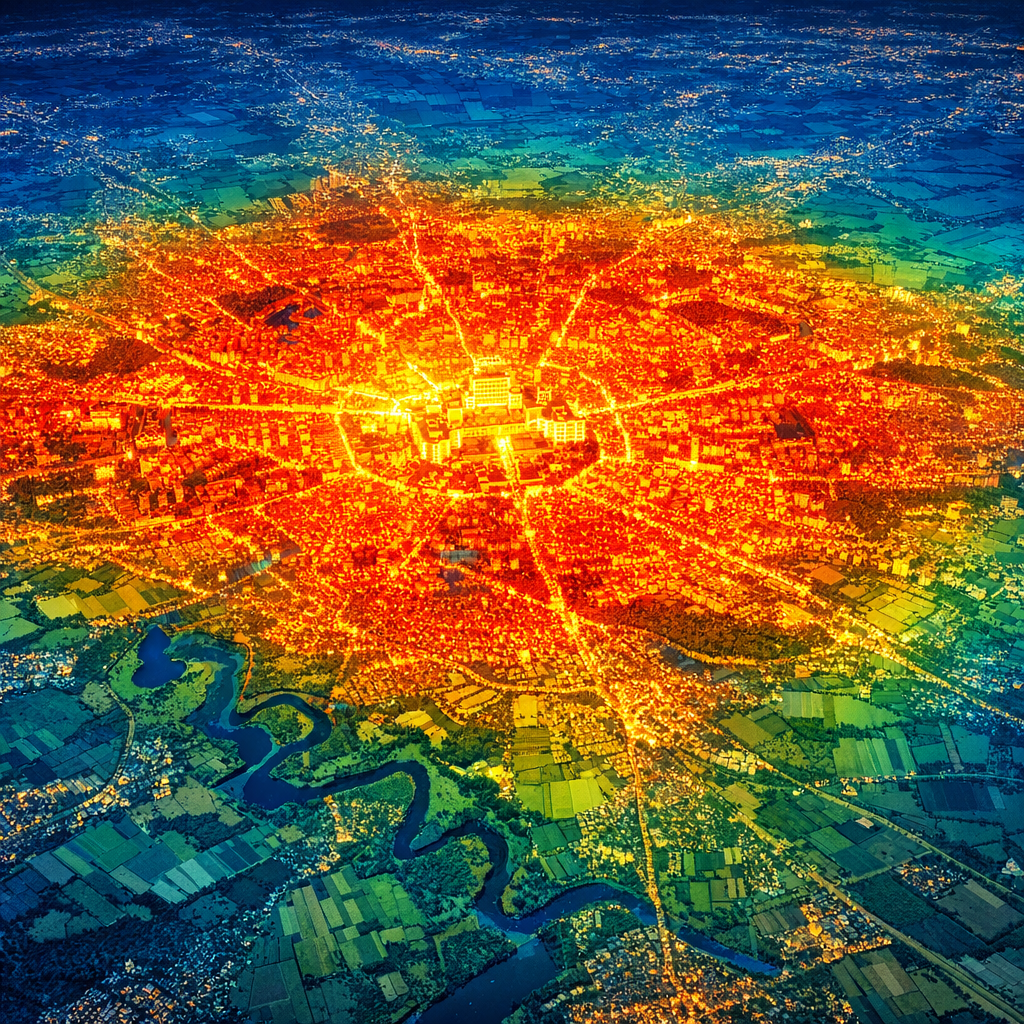
Bucharest, like many major cities worldwide, experiences the Urban Heat Island (UHI) effect—a phenomenon where urban areas are significantly warmer than their rural surroundings. This temperature disparity arises from factors such as extensive concrete surfaces, reduced vegetation, and human activities that generate heat.
Causes of the UHI Effect in Bucharest
Several elements contribute to the UHI effect in our city:
- Land Use Changes: Over the past decades, Bucharest has seen a substantial increase in built-up areas, replacing green spaces and agricultural lands. This shift has led to higher land surface temperatures, as urban materials like asphalt and concrete absorb and retain more heat compared to natural landscapes.
- Urban Design: The city’s dense infrastructure, characterized by closely packed buildings and narrow streets, limits airflow and enhances heat retention. Additionally, the prevalence of dark-colored surfaces in roads and rooftops contributes to higher temperatures.
- Reduced Vegetation: The decrease in urban greenery diminishes the cooling effects of shade and evapotranspiration, processes that naturally lower temperatures.
Impacts on the Local Environment
The UHI effect in Bucharest has several notable consequences:
- Increased Energy Consumption: Higher temperatures lead to greater use of air conditioning, resulting in elevated energy demand and associated costs.
- Health Risks: Prolonged exposure to elevated temperatures can exacerbate health issues, particularly for vulnerable populations such as the elderly and those with pre-existing conditions.
- Altered Weather Patterns: The UHI effect can influence local weather, potentially increasing the frequency and intensity of heatwaves and affecting precipitation patterns.
Mitigation Strategies
Addressing the UHI effect requires a multifaceted approach:
- Enhancing Green Spaces: Expanding parks, planting trees along streets, and creating green roofs can provide shade and promote cooling through evapotranspiration.
- Implementing Cool Roofs and Pavements: Utilizing materials that reflect more sunlight and absorb less heat can significantly reduce surface temperatures.
- Promoting Sustainable Urban Planning: Designing buildings and urban layouts that facilitate natural ventilation and incorporate green spaces can mitigate heat accumulation.
By understanding the factors contributing to the UHI effect and implementing targeted strategies, Bucharest can work towards creating a more comfortable and sustainable urban environment for its residents.