

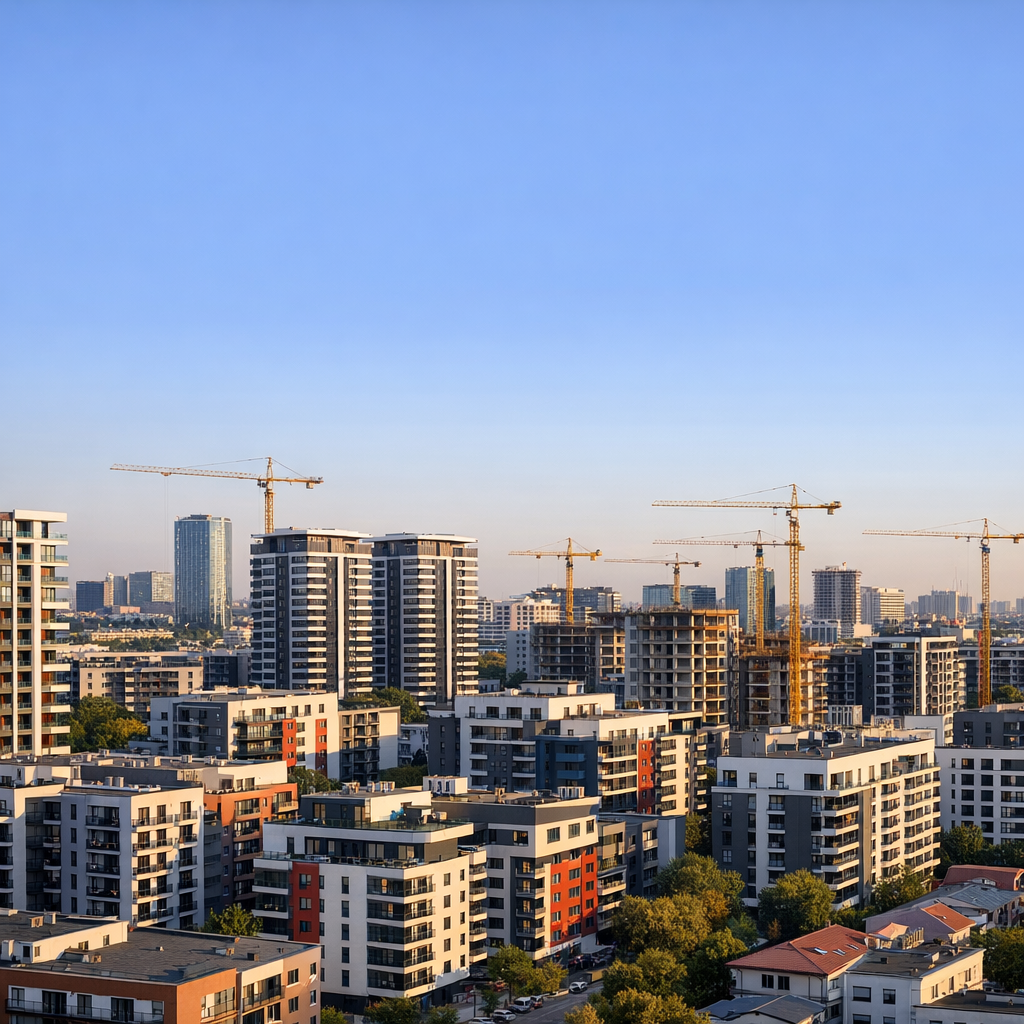
Bucharest’s real estate market is undergoing significant transformations, marked by fluctuating transaction volumes, rising property prices, and shifting buyer priorities. Understanding these trends is crucial for prospective buyers and investors aiming to make informed decisions.
Market Dynamics: Prices and Transactions
In the first quarter of 2026, the residential market in Bucharest experienced a notable slowdown. Apartment transactions declined by 18.6% compared to the same period in 2025, while Ilfov County saw a 10.9% decrease. Despite this reduction in transaction volumes, property prices continued their upward trajectory. New apartment prices surged by approximately 20%, reaching an average of €2,500 per square meter. This trend suggests that while fewer properties are changing hands, the demand remains robust enough to drive prices higher.
Supply Constraints and Development Pipeline
The market’s supply side has faced challenges. In 2025, only 4,013 building permits were issued in the Bucharest–Ilfov region, marking the lowest level in the past five years. This limited pipeline has contributed to the supply-demand imbalance, further fueling price increases. However, the outlook for 2026 appears more optimistic, with over 20,000 residential units expected to be delivered in Bucharest and Ilfov. This anticipated influx could gradually shift the market dynamics in favor of buyers.
Emerging Buyer Preferences
Recent analyses indicate a shift in buyer priorities. Homebuyers are increasingly valuing access to transport infrastructure, public services, and urban amenities over price considerations. This trend underscores the importance of location and connectivity in the decision-making process, reflecting a more pragmatic approach among purchasers.
Affordability Concerns
The continuous rise in property prices has raised concerns about affordability. In May 2026, new apartment prices in Bucharest increased by 25% year-on-year, reaching €2,632 per square meter. This escalation has made homeownership increasingly challenging for many residents, highlighting the need for strategic planning and financial preparedness for those entering the market.
In conclusion, Bucharest’s real estate market is characterized by a complex interplay of declining transaction volumes, rising prices, and evolving buyer preferences. Prospective buyers and investors should stay informed about these trends to navigate the market effectively and make decisions aligned with their objectives.