

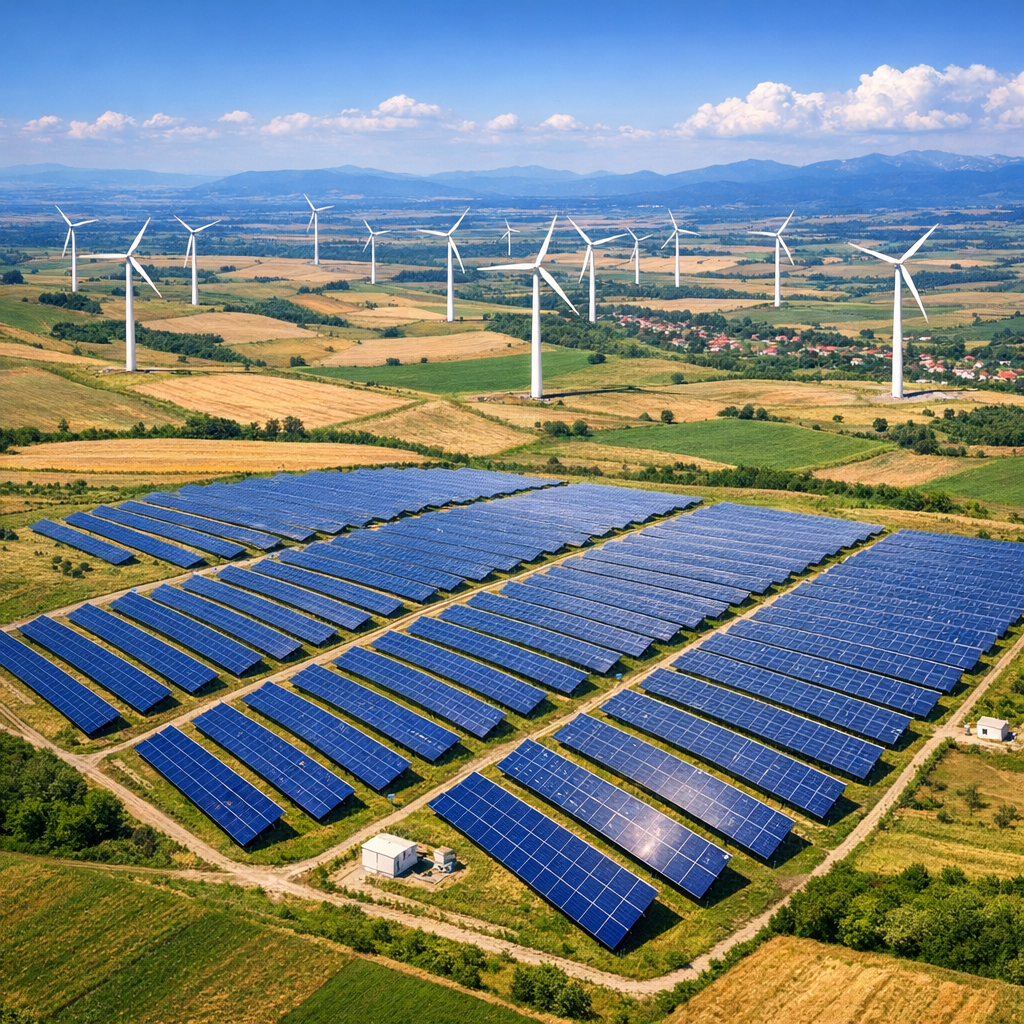
Romania has set an ambitious goal to achieve climate neutrality by 2050, aligning with the European Union’s broader environmental objectives. This commitment involves substantial reductions in greenhouse gas (GHG) emissions and a significant shift towards renewable energy sources.
Progress in Emissions Reduction
As of 2023, Romania accounted for approximately 2% of the EU’s net GHG emissions, having achieved a net emissions reduction of 50.8% compared to 2005 levels. This progress is attributed to a combination of factors, including the decommissioning of coal-fired power plants and increased investments in renewable energy infrastructure.
Renewable Energy Initiatives
The country’s updated National Energy and Climate Change Plan targets a 38% share of renewable energy consumption by 2030. Efforts are underway to develop wind, solar, and biomass energy projects, alongside plans to expand nuclear capacity with new small modular reactors. Additionally, Romania is investing in battery energy storage systems to support its renewable energy goals.
Challenges in Energy Transition
Despite these advancements, Romania faces several challenges in its energy transition. The energy sector remains the primary source of GHG emissions, contributing to 68% of the total. The country’s reliance on fossil fuels persists, necessitating a more aggressive shift towards cleaner alternatives. Moreover, the transport sector has seen a 65% increase in emissions between 2005 and 2023, highlighting the need for comprehensive strategies to address this trend.
Policy and Implementation Hurdles
While Romania has committed to the EU’s target of climate neutrality by 2050, the deployment of various renewable energy sources requires further efforts. Structural challenges such as limited institutional capacity, insufficient coordination, and a lack of data and planning impede progress. Additionally, cities, which account for approximately 75% of energy consumption, often lack robust climate strategies and monitoring systems.
Looking Ahead
To achieve its climate neutrality goals, Romania must intensify mitigation efforts, particularly in non-ETS sectors like buildings, road transport, agriculture, waste, and small industry, which account for about 70% of emissions. The country needs to balance short-term energy needs with longer-term climate objectives, ensuring timely investment in clean energy alternatives. Expanding low-carbon generation is essential to support the electrification of buildings, transport, industry, and green hydrogen production.
In conclusion, while Romania has made commendable strides towards reducing emissions and promoting renewable energy, sustained efforts and strategic planning are crucial to overcome existing challenges and achieve climate neutrality by 2050.