

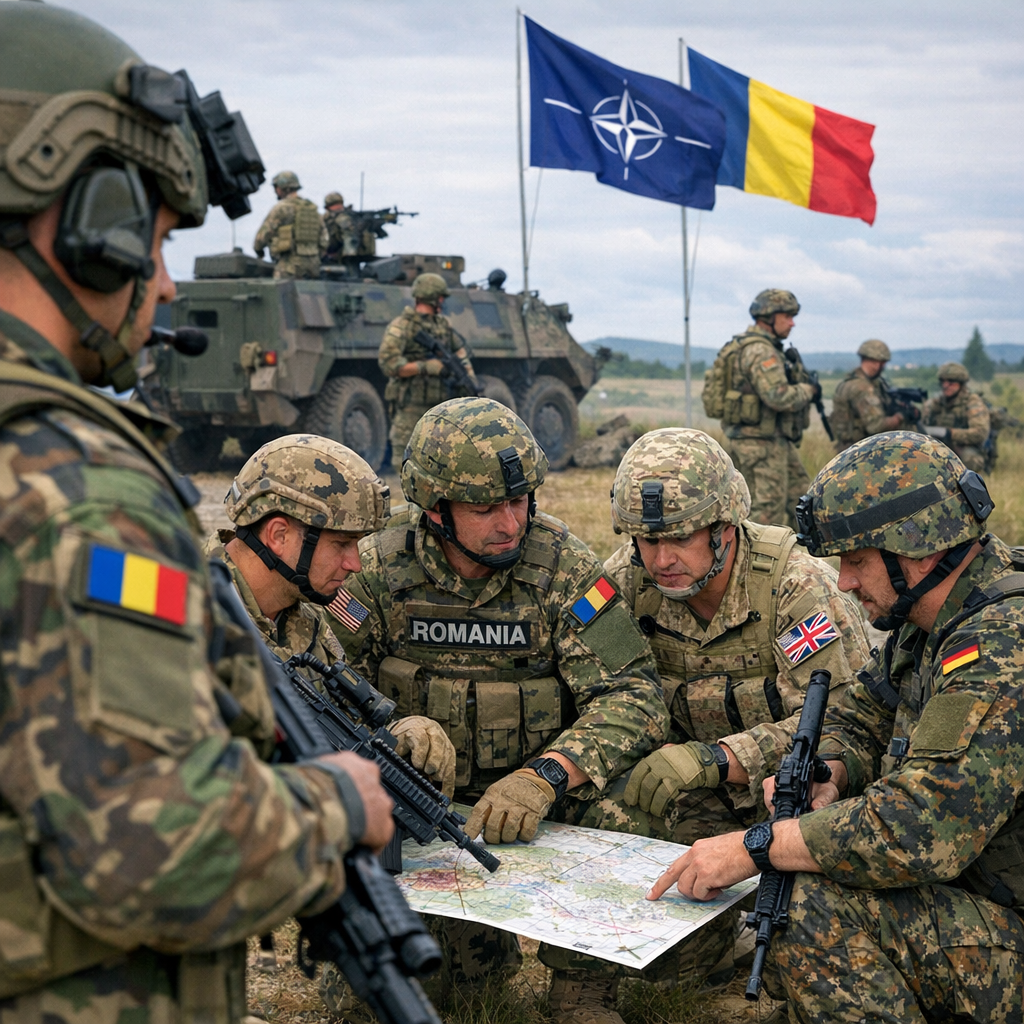
Romania’s strategic location on NATO’s eastern flank has become increasingly significant in the face of evolving global security dynamics. As a frontline state bordering Ukraine, Romania is acutely aware of the threats posed by regional conflicts and geopolitical tensions.
Enhancing Defense Capabilities
In response to these challenges, Romania has been actively bolstering its defense infrastructure. The relocation of NATO’s largest base to Romanian territory underscores the country’s strategic importance within the Alliance. This move aims to strengthen deterrence and ensure rapid response capabilities in the region.
Addressing Drone Incursions
Recent incidents, such as the crash of a Russian-made drone into a residential building in Galati, have highlighted the need for improved air defense systems. This event marked the first direct impact on Romanian civilians from such incursions, prompting calls for enhanced anti-drone capabilities and closer cooperation with NATO allies.
Economic Implications
Beyond military considerations, global events have also impacted Romania’s economy. The Middle East conflict has disrupted the arrival of Asian workers, leading to potential labor shortages in vital sectors like construction and hospitality. Additionally, political instability and delays in implementing fiscal consolidation measures could weaken fiscal discipline and affect public debt sustainability.
Climate Resilience
Climate change poses another layer of challenge. Romania has experienced a significant increase in surface air temperatures, exceeding 2°C above the baseline period of 1981-2010. This warming trend intensifies climate-related hazards, placing considerable strain on agriculture, water resources, and energy systems.
Conclusion
As global events continue to unfold, Romania’s proactive measures in defense, economic policy, and climate resilience are crucial. Strengthening alliances, enhancing internal capabilities, and addressing economic vulnerabilities will be key to navigating the complex global landscape.