

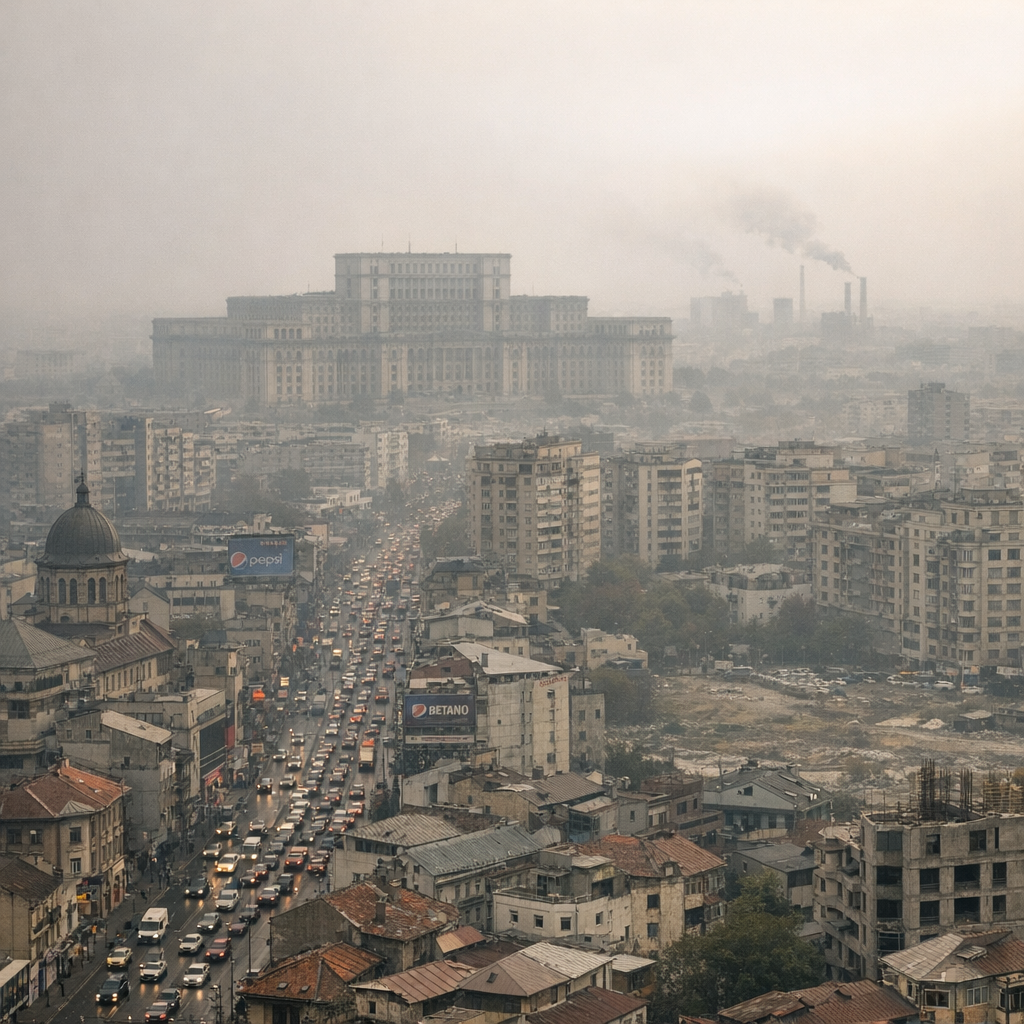
Bucharest, Romania’s bustling capital, is grappling with significant environmental challenges that impact the daily lives of its residents. Recent studies highlight critical concerns such as deteriorating air quality, inefficient waste management, and insufficient green spaces.
Air Quality Concerns
Air pollution has reached alarming levels in Bucharest, with road traffic contributing to 60% of harmful emissions. This situation poses serious health risks and underscores the need for comprehensive strategies to improve air quality. Source
Waste Management Issues
Waste management remains a critical issue. Of the nearly 564,000 tons of waste produced annually, only 42% is treated, with the rest going to landfills. Selective collection is poorly implemented, and urban agriculture is nearly absent, leaving Bucharest heavily reliant on external food sources. The city’s circular economy efforts remain largely theoretical. Source
Green Space Deficiency
While only 60% of apartments and 55% of houses are located within one kilometre of a park, construction continues to rise rapidly. Over 268,000 housing units have been built between 2010 and 2023, often without sufficient infrastructure or green buffers. Source
Community Involvement
Addressing these environmental challenges requires active community participation. Initiatives like the “In YOUR AREA” program encourage residents to propose and implement projects aimed at improving local environmental conditions. Such grassroots efforts are vital for fostering a sustainable urban environment. Source
As Bucharest continues to develop, it is imperative for both authorities and citizens to collaborate on sustainable solutions. By addressing air pollution, enhancing waste management, and expanding green spaces, the city can improve the quality of life for all its residents.